- Complimentary Shipping & Returns

My Wishlist

Your wishlist is empty
Start saving your favorite items here
Your Cart

Your Shopping Cart is Empty
Looks like you haven't added anything to your cart yet. Let's get shopping!
Start Shopping Now4C's of Diamonds
What are 4Cs of Diamonds?
Selecting the ideal diamond may seem daunting; however, familiarizing oneself with the Four C's —Cut, Color, Clarity, and Carat—can streamline the decision-making process. These widely recognized criteria assist in evaluating a diamond's quality and worth, enabling you to make a well-informed selection. Below is an explanation of each C and its impact on the diamond's overall aesthetic appeal and cost.
Understanding the 4Cs of Diamonds: Cut, Color, Clarity, and Carat Weight
The 4Cs of diamonds—Cut, Color, Clarity, and Carat Weight — are the key factors that determine a diamond's quality and value. Cut refers to how well a diamond is shaped and affects its brilliance. Color measures how colorless the diamond is, with the best stones having no color.
- Cut
- Color
- Clarity
- Carat
Cut of Diamonds
Cut of a diamond refers to the overall proportioned surfaces of a diamond. One might wonder how the surfaces of a diamond contribute to a diamond's beauty and brilliance.

Crown height
Showcase your projects with stunning high-quality images that capture every detail.
Pavilion depth
Offer in-depth project information to draw in your audience and highlight your craftsmanship.
Table diameter
Give each project a unique identity with customizable features and personalized details.
Girdle thickness
Display completion dates to showcase your commitment to excellence and timely delivery.
Crown angle
Include time duration to give an insight into the effort and dedication put into each project.
Pavilion angle
List client names to build credibility and trust with potential customers.
The assessment of a diamond's cut is conducted in controlled laboratory settings, as the nuances are imperceptible to the naked eye and can only be discerned by trained experts. To the average observer, even a diamond with a shallow cut may appear flawless in every aspect.
While the natural characteristics of a diamond's color and clarity are determined by nature, the quality of the cut is a human endeavor that enhances its brilliance. The planning, proportions, precision in cutting, and finishing details dictate the diamond's brilliance, dispersion, and scintillation. If the cutting parameters that are within human control are not optimized, the diamond's visual appeal may suffer. The art of diamond faceting has evolved over time, especially with advancements in lighting technology. Various shapes and cutting styles exist, each exhibiting unique visual attributes, with the Round Brilliant being the most favored diamond shape in the era of modern electric lighting.
Proportions

Light Return


"Ideal" Excellent to Very Good
Light Return
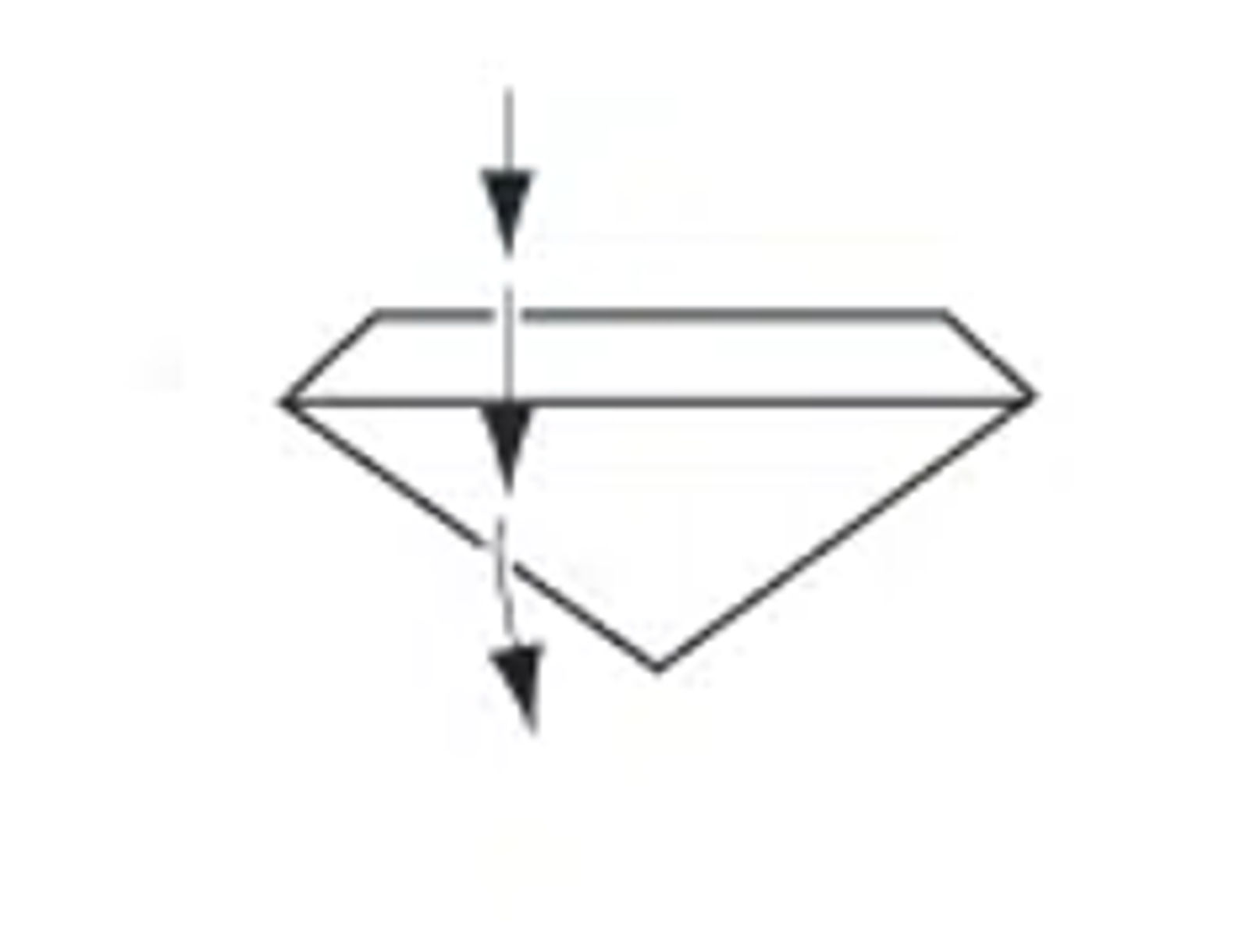
Too Shallow

Too Deep

Excellent to Good
Grading: Ranges from Excellent to Poor, based on proportions, symmetry, and polish
Color of Diamonds
The color of a diamond is a crucial element in assessing its rarity, value, and pricing. Naturally occurring diamonds exhibit a spectrum of colors, such as orange, yellow, pink, grey, blue, brown, white, red, and even black. The evaluation and pricing of these colored diamonds differ significantly. Most gem-quality diamonds utilized in jewelry display shades ranging from completely colorless to those with noticeable yellow or brown hues.
The most rare and valuable diamonds fall within the colorless category, graded D, E, and F on a descending scale that extends to Z. Diamonds exhibiting more color than Z, or those in other hues like orange, pink, or blue, are categorized as 'Fancy Colored Diamonds' and are assessed using the IGI Colored Diamond Report. To accurately identify the color, all submitted diamonds are compared against an internationally recognized master set of stones, which spans from D, or colorless (the most desirable), to Z, the most yellow or brown, excluding 'fancy' yellow or brown.

D - F
Colorless

G - J
Near Colorless

K - M
Slightly Tinted

N - R
Very Light Color

N - R
Light Color
| Grade | Subgrade/Description |
|---|---|
| D, E, and F | Colorless |
| G, H, I, and J | Near Colorless |
| K, L, and M | Slightly Tinted |
| N, O, P, Q, and R | Very Light Yellow |
| S, T, U, V, W, X, Y, and Z | Light Yellow |
As diamonds approach colorless grades, their prices increase significantly. It is important for customers to understand that the variations in color are so subtle that they can only be detected under a microscope. For those who are sensitive to even the slightest color differences, there are more affordable yet equally appealing options available in the F, G, H, and I grades. In fact, nearly 68% of consumers opt for diamonds within these grades.
Some things customers should keep in mind regarding the color of a diamond
- It isn't difficult to assess color after the diamond is set on a piece of jewelry because the color is influenced by the color of the jewelry, compared to that in common light settings.
- Color plays a greater visible factor in large diamonds or diamonds with large carat weight. This is one of the reasons small diamonds are a more preferred choice than large ones.
- 3. The Cut of a diamond is very important in determining its color. In a well-cut diamond, light passes through it and reflects on shorter ray-paths with greater intensity, making the diamond appear less colored. On the other hand, if the diamond cut is shallow or deep, the light rays become concentrated at the bottom, giving it an exaggerated look from the top.
- 4. As mentioned earlier, the color difference is minuscule, and it is almost invisible to an unaided eye. So, resorting to a lesser grade would not make a very huge difference in the overall appearance but will surely make a difference in the budget. Grade Subgrade/Description D, E, and F Colorless G, H, I, and J Near Colorless K, L, and M Faint Yellow N, O, P, Q, and R Very Light-Yellow S, T, U, V, W, X, Y, and Z Light Yellow
- Finally, yellow diamonds are no less diamonds so if you have a piece of jewelry like a necklace or a ring which really contrasts or goes well with yellow more than white, you should choose it over the other.
Clarity of Diamonds
Diamonds are formed under conditions of extreme heat and pressure, resulting in both internal and external characteristics that are prevalent. These features assist gemologists in distinguishing natural diamonds from synthetic ones and simulants, as well as in identifying individual stones. Clarity characteristics are categorized into two types: inclusions and blemishes. To accurately assess a diamond's clarity, one must examine the quantity and nature of both internal and external characteristics, along with their size and positioning. The distinction lies in their locations: inclusions are found within the diamond, whereas blemishes are external features. Grading reports from reputable Independent Grading and Accreditation Services Providers include plotted diagrams that highlight clarity characteristics, with internal features marked in red and external features in green.

| Category | Flawless | Internally Flawless | Very Very Slightly Included | Very Slightly Included | Slightly Included | Included |
|---|---|---|---|---|---|---|
| Grade | FL | IF | VVS1 / VVS2 | VS1/VS2 | SI1/SI2 | I1/I2/I3 |
Carat of Diamond
Carat weight or mass (ct) is a unit of measurement of the weight of a gemstone. The use of Ct as a unit is limited to gemstones and is also prevalent in other forms of jewels such as pearls.
The contemporary metric carat, adopted in 1907, demarcates that 1 carat is precisely equal to 200 mg or 0.2 grams. A carat is divided into 100 points, which means:
- 1 carat = 100 points
- Three-Quarter Carat = 75 points
- Half Carat = 50 points
- Quarter Carat = 25 points
When diamonds are mined, large gems are discovered much less frequently than small ones, which makes large diamonds much more valuable. Diamond prices rise exponentially with carat weight. So, a 2-carat diamond of a given quality is always worth more than two 1-carat diamonds of the same quality.
It is important to note that diamonds of the same weight don't necessarily have the same size appearance. Those cut too shallow or deep may look small for their weight or suffer in brilliance.
A comprehensive Diamond Size Charts by Shape is as follows to find the perfect fit for your jewelry designs.